

Silicon CDMA Sensing architectures and IP
The Sensing Intelligence Platform
The Sensing Intelligence Platform
Tensor-ΣΔ ICs & IP developed analog front end platforms
Our general‑purpose Tensor‑ΣΔ AFEs are self‑configuring, adaptive, and designed to offload ML workloads to the host processor giving CogniSense Labs a clear sensing edge across consumer devices, wearables, and robotics. They deliver high‑fidelity, high‑dynamic‑range signals that remain stable through moisture, gloves, vibration, electrical noise, and other real‑world conditions.
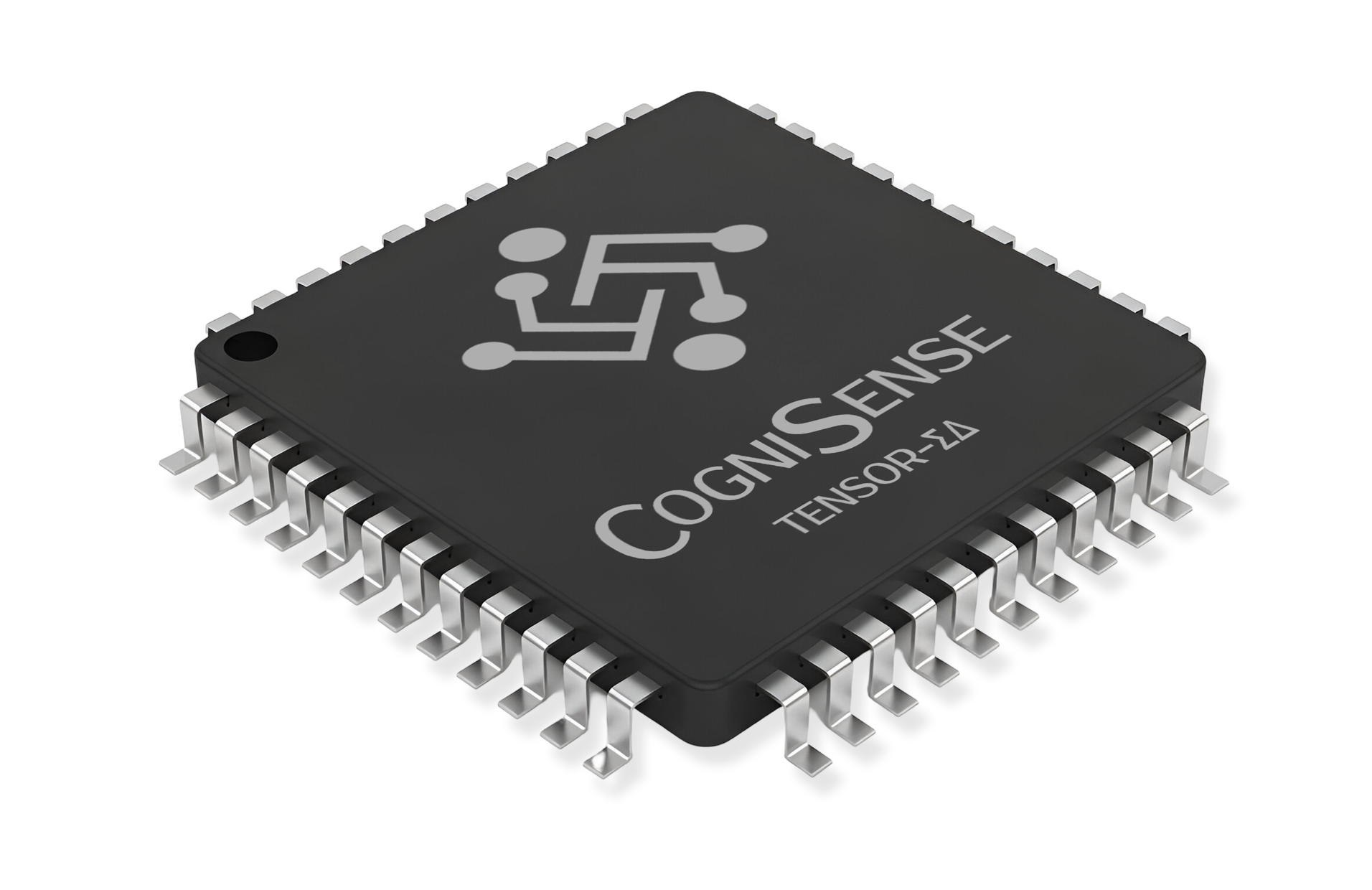

Our patent pending integrated CDMAX ΣΔ (CDMA Extended) in the CogniSense architecture introduces simultaneous coded multi-channel acquisition, eliminating scan latency inherent in multiplexed sensing systems., enabling simultaneous multi-channel acquisition without the latency or bandwidth constraints of traditional polling methods.
From Digital Bottlenecks to Signal-preserving Sensing Architecture
- Traditional consumer devices rely on on‑chip digital processing, digitizing signals after irreversible filtering removes information required for adaptive interpretation.
- CogniSense Labs introduces a sigma‑delta analog front‑end (AFE) that captures high‑resolution, low‑noise raw signals directly at the sensor interface.
Digital Processing on the Host, Not AFE Silicon
- Raw data streams on the host are processed by onboard AI models, enabling adaptive, context‑aware interpretation instead of fixed digital pipelines.
- Reduces fixed digital preprocessing stages traditionally required before inference.
Signal Intelligence Starts at the Edge
The shift from low‑resolution, fixed‑firmware touch ICs to CogniSense’s Tensor-ΣΔ AFEs capture continuous touch physics, enabling software-defined interpretation beyond fixed firmware controllers. Resolution, noise immunity, scalability, and power efficiency enabling software‑defined touch go far beyond X,Y coordinates to interpret identity, intent, pressure, and biometrics.
The Problem: Sensors Lose Data Before Intelligence Begins
Most sensing systems digitize signals only after aggressive filtering, multiplexing, and compression. While necessary for legacy electronics, these steps permanently discard signal information required for accurate interpretation in dynamic environments.
As a result, modern systems rely on increasingly complex digital processing and AI models to compensate for information that has already been lost. The limitation is not software but it is acquisition architecture.
Our Approach: Signal Intelligence Starts at the Edge
CogniSense Labs introduces Tensor-ΣΔ, a continuous-time analog front-end architecture designed to preserve signal fidelity at the moment of measurement.
Instead of scanning sensors sequentially or reducing signals prematurely, Tensor-ΣΔ captures structured multi-channel signal data that retains temporal and spatial relationships across sensing domains. This enables software and AI systems to interpret richer physical information.
The Problem: Sensors Lose Data Before Intelligence Begins
Most sensing systems digitize signals only after aggressive filtering, multiplexing, and compression. While necessary for legacy electronics, these steps permanently discard signal information required for accurate interpretation in noisy, dynamic environments.
As a result, modern systems rely on increasingly complex digital processing and AI models to compensate for information that has already been lost. The limitation is not software but it is acquisition architecture.
Our Approach: Signal Intelligence Starts at the Edge
CogniSense Labs introduces Tensor-ΣΔ, a continuous-time analog front-end architecture designed to preserve signal fidelity at the moment of measurement.
Instead of scanning sensors sequentially or reducing signals prematurely, Tensor-ΣΔ captures structured multi-channel signal data that retains temporal and spatial relationships across sensing domains. This enables software and AI systems to interpret richer physical information.
Why choose us
We wrote the book on intelligent surfaces using sigma-delta technologies.
Revolutionizing Sensing Through Signal Intelligence & AI
“We don’t fight noise – we make it irrelevant“
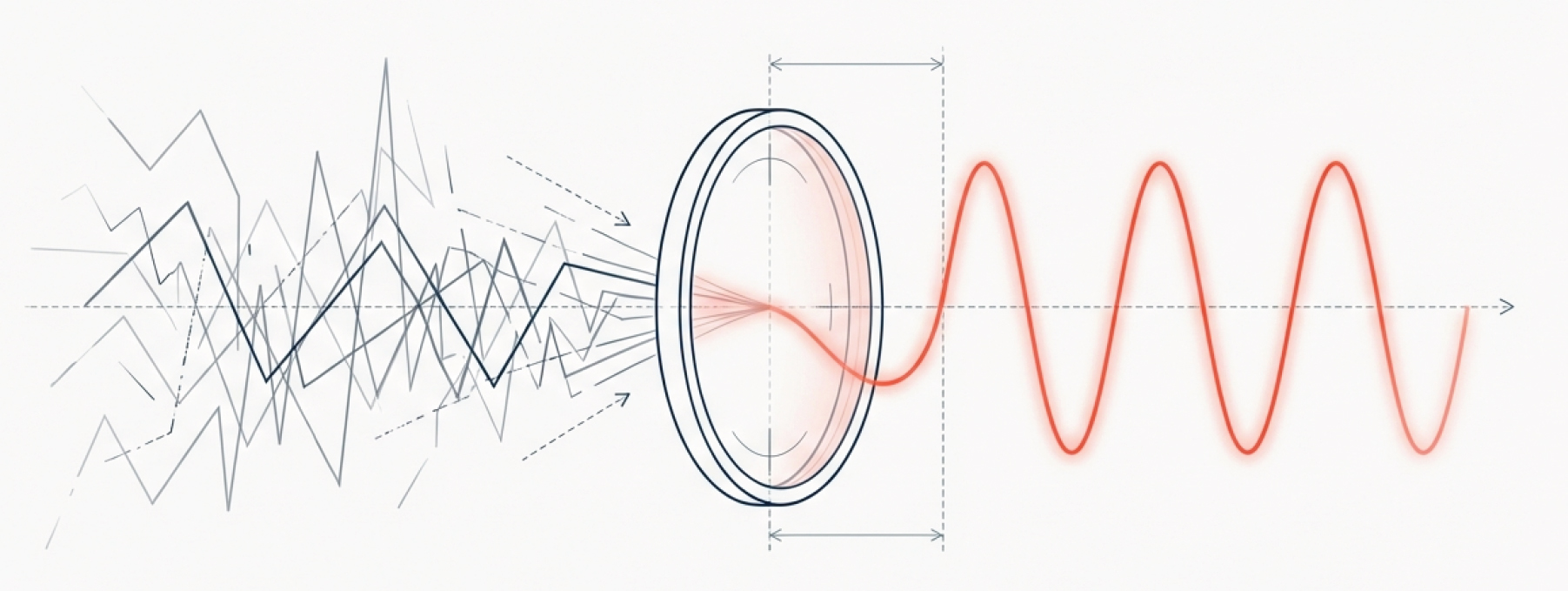
CogniSense Labs brings deep expertise in sensing and high‑resolution signal acquisition. By working directly with raw sensor data and applying signal inference analytics, the platform unifies multiple sensing modalities into a single intelligent signal‑processing layer delivering precision and insight conventional architectures can’t match.
Get On Our Mailing List
We’re at the start of making sensing simpler, smarter, and ready for building next‑gen products with Tensor‑ΣΔ.