
Adaptive CDMA Signal Architecture

Orthogonal Integrated ΣΔ CDMA

Fundamentally Unique: Two-Stage Hierarchical Code Architecture

Our patents pending integrated CDMA ΣΔ in the CogniSense architecture marks a pivotal advancement in sensor data handling, enabling simultaneous multi-channel acquisition without the latency or bandwidth constraints of traditional polling methods. By leveraging code division multiplexing inside the analog front end, CogniSense can capture high-resolution signals from hundreds of sensor nodes concurrently, each encoded with a unique signature, allowing for real-time fusion of spatial, temporal, and pressure data.
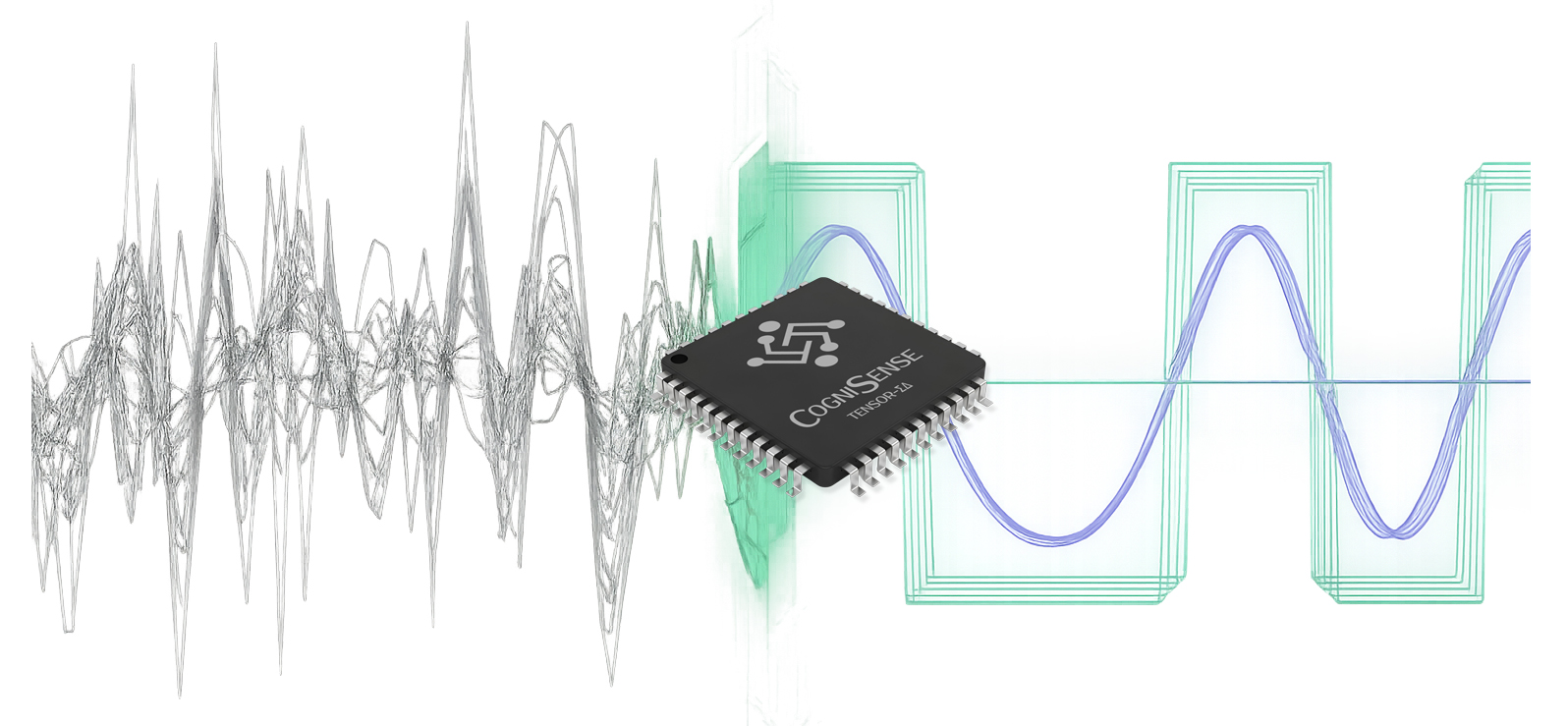
CDMA-Integrated ΣΔ Sensing

This unlocks a new class of intelligent HMI interfaces where WHO, WHAT, and HOW are sensed in parallel, dramatically improving responsiveness, contextual awareness, and AI inference accuracy at the edge. CDMA transforms the sensing substrate into a high-bandwidth, low-power data fabric – ideal for large-format displays, multi-user environments, and biometric-rich applications

CDMA-Integrated ΣΔ Sensing (32+ Patents Pending)
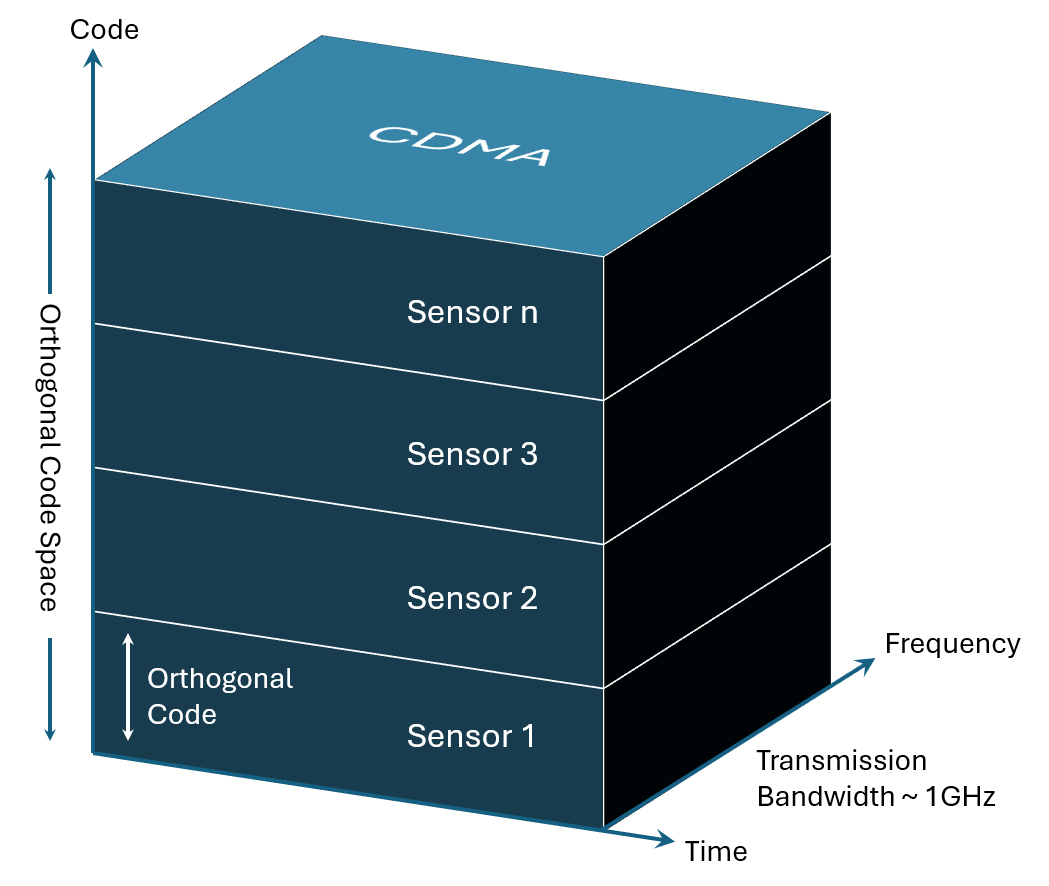
“Today’s typical touch controllers scan electrodes one at a time… degrading signal quality.”

Embedding the CDMA inside the sigma‑delta loop provides analog‑level interference suppression, simultaneous multi‑channel operation, and eliminates the frame‑rate vs. electrode‑count tradeoff.

CDMA gives each sensor channel a unique orthogonal code, so the system separates signals mathematically rather than by time slots or frequency slices.

“Our architecture extracts rich diagnostic information from the two‑stage correlation process… that no single‑stage controller can access.”

This enables auto‑configuration, self‑healing, predictive diagnostics, and dramatically reduces engineering effort and field failures.

“Water rejection… is a critical unsolved problem for outdoor and automotive touchscreens.”

Code‑domain signatures, hybrid CDMA/TDMA switching, and multi‑layer feature extraction enable pen classification, high‑bandwidth sensing, and robust water rejection beyond what scanning architectures can achieve.

Your Content Goes Here

“By shaping the spreading code’s spectrum to avoid interference frequencies before correlation, we prevent interference energy from ever entering the signal processing chain.”

This provides active, targeted EMI rejection, per‑channel adaptation, and stable operation in environments where conventional controllers fail.

“By reusing codes across non‑adjacent regions, we maintain full frame rate regardless of user count.”

Spatial segmentation and predictive code allocation create a virtual code space, enabling true multi‑user interaction, low‑latency stylus performance, and robust palm rejection.

“Our architecture provides security as an inherent property of the sensing waveform.”

Multi‑layer physical, cryptographic, and waveform‑level protections create hardware‑native security, anti‑spoofing, and unclonable authentication without external modules.

“No other touch controller architecture can provide this level of diagnostic specificity because they lack the multi‑layer metrics.”

Cross‑layer diagnostics, self‑supervised labeling, and embedded health scoring enable predictive maintenance, fleet learning, and remote fault identification.

Our Inherent Self-Healing Benefits

Our system runs a continuous self-diagnostic loop that monitors signal integrity and sensor health in real time. It begins by measuring SNR, orthogonality, and other performance indicators, then classifies deviations to identify the precise root cause of degradation. Based on that classification, the system adapts its operating parameters—automatically adjusting amplitudes and signal paths to maintain optimal performance. Each cycle reinforces the onboard model, enabling continuous learning and improved classifier accuracy. Telemetry is reported upstream for fleet‑level visibility, closing the loop and restarting the measurement phase.
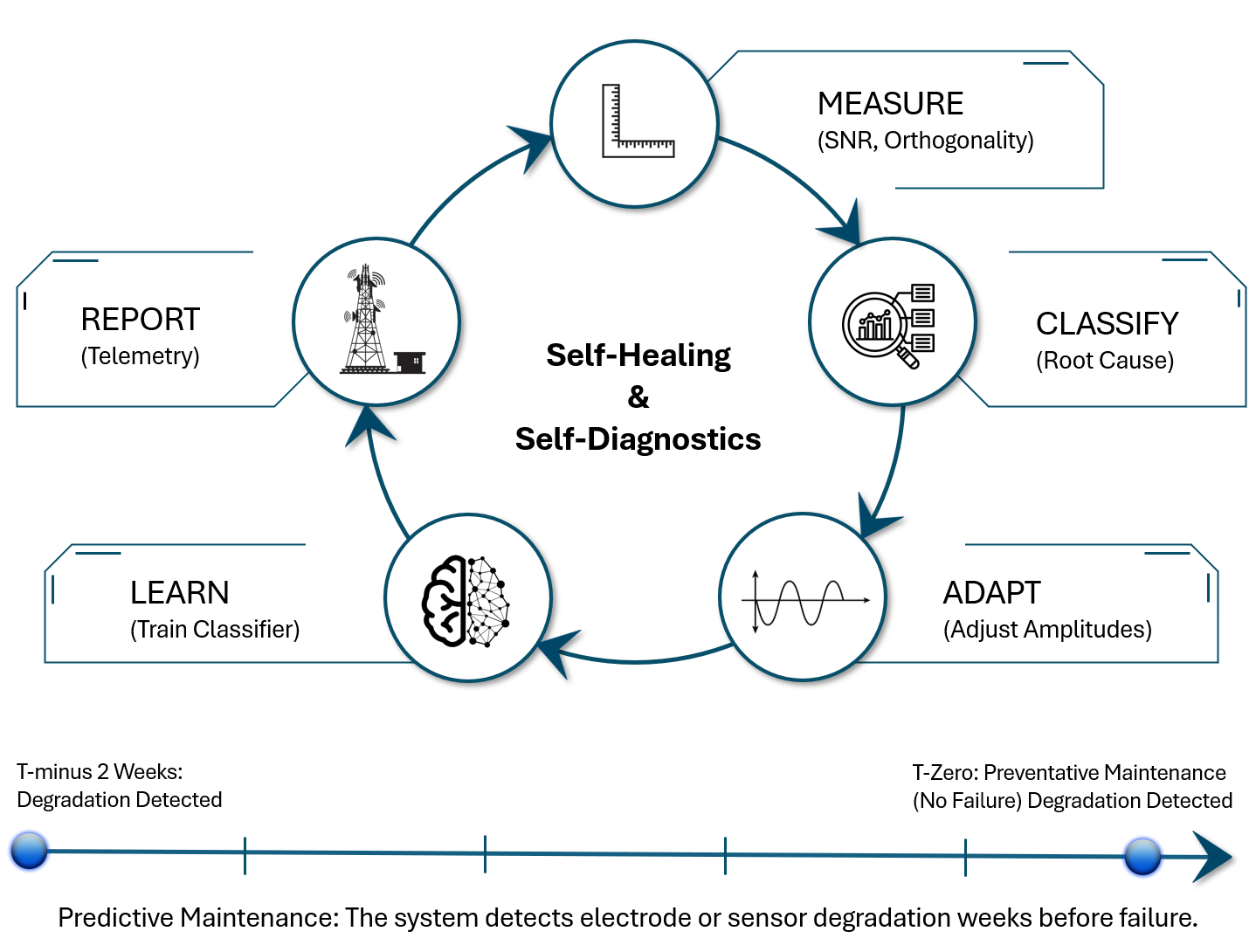
This closed-loop process enables true predictive maintenance: the system detects electrode or sensor degradation weeks before failure, allowing maintenance to be scheduled proactively rather than reactively.

Tensor-ΣΔ Architecture Supports AI Processing Natively

Our platform is engineered for AI‑native sensing, delivering higher‑fidelity inputs, greater compute efficiency, and a fully programmable pipeline that scales with modern ML workloads.

The 5 Distinct CogniSense Tensor‑ΣΔ Capabilities
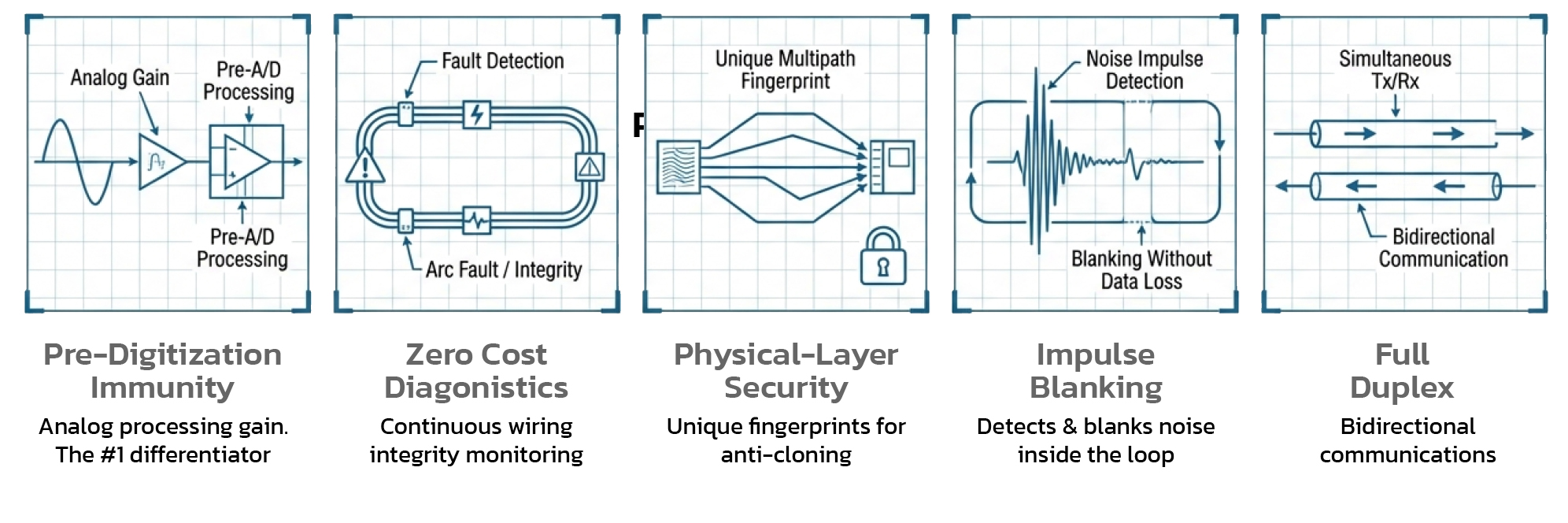
CogniSense’s Tensor‑ΣΔ capabilities turn each of these five functions into transportation‑grade advantages. Pre‑digitization immunity gives vehicles a cleaner, more reliable view of the analog world before noise ever reaches the ADC, which is essential for EV power networks, braking systems, steering actuators, and any domain where signal corruption can’t be tolerated. Impulse blanking and full‑duplex communication further strengthen this foundation by ensuring uninterrupted, high‑integrity data flow across long harnesses, shared power lines, and electrically noisy environments common in buses, trucks, rail, and aviation.

The diagnostic and security elements, continuous wiring‑integrity monitoring and physical‑layer fingerprinting, directly elevate transportation safety. NP8‑style zero‑cost diagnostics transform every cable run into a real‑time health sensor, enabling predictive maintenance for fleets and preventing arc‑fault‑driven fires. NP12‑level authentication ensures that every module, sensor, and subsystem is verifiably genuine, blocking counterfeit or tampered components at the physical layer. Together, these capabilities position CogniSense as a foundational technology for next‑generation transportation systems that demand reliability, resilience, and trust built directly into the wiring itself.